Engineering Revenue Velocity: Deploying Scalable Voice Automation Layers for Sustainable Enterprise Pipeline Execution
 0|
 0
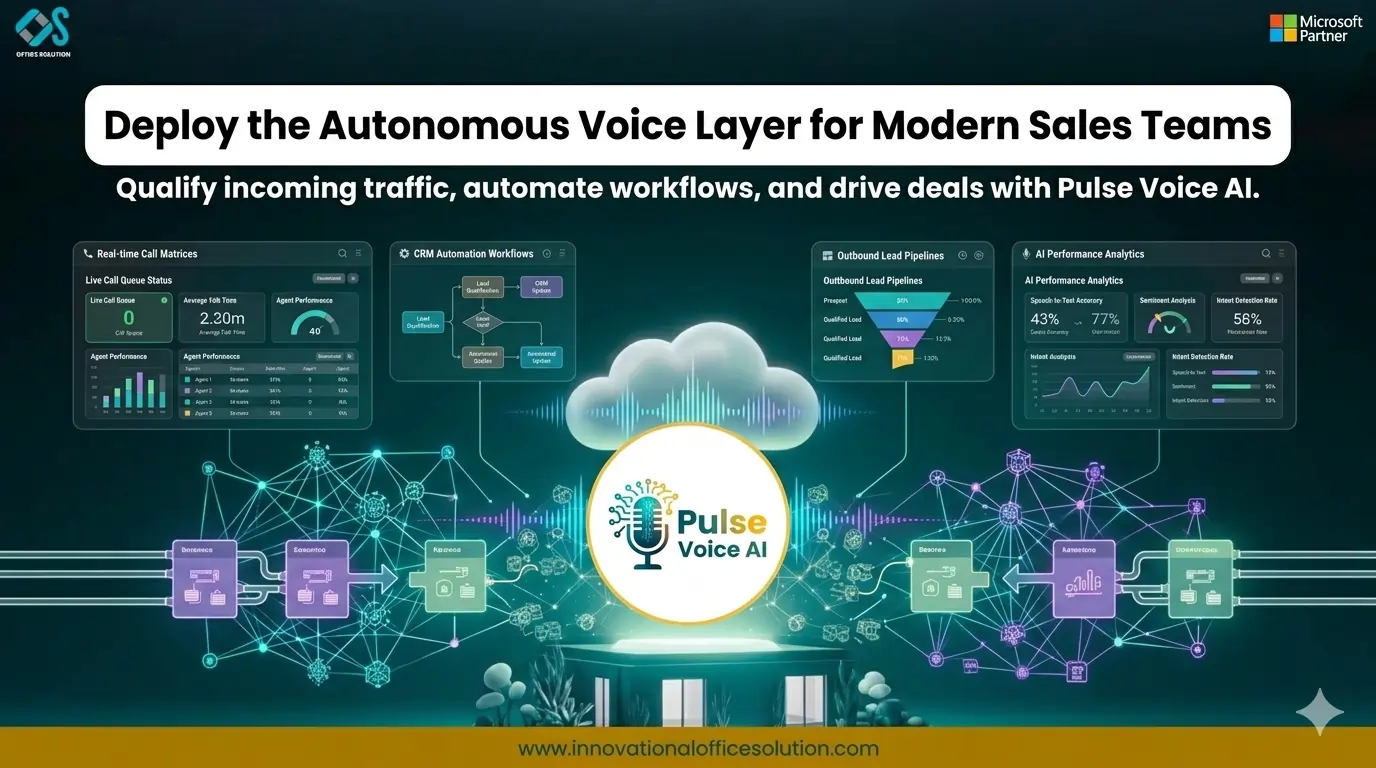
Table of Contents
Enterprise growth within complex business-to-business sectors relies fundamentally on the efficiency, precision, and speed of customer communication networks. Modern go-to-market teams constantly struggle with operational leaks at critical inflection points: cold lead data sits unaddressed for weeks, inbound engagement requests experience delayed responses, and valuable sales professionals spend excessive field hours handling manual dialers or logging notes. When experienced account directors dedicate the majority of their daily routine to top-of-funnel administrative tasks rather than high-value strategic negotiations, corporate pipeline expansion inevitably stalls.
To systematically remove these operational capacity limits, forward-thinking enterprise revenue teams are adopting enterprise-grade conversation engines. Implementing Pulse Voice AI into your centralized business architecture provides a resilient, always-on communications framework that handles frontend prospecting and data validation instantly. By leveraging real-time semantic processing models designed around precise enterprise business rules, companies can establish unbroken market coverage, optimize database monetization, and empower closing executives to spend their energy entirely on executing complex agreements.
Eliminating Top-of-Funnel Drag via Automated Multi-Stream Outreach
Building a consistent and predictable B2B sales pipeline requires an extreme volume of outreach touchpoints, deep conversational discipline, and absolute messaging uniformity. Human business development teams face natural physical constraints: their production is limited by standard geographic timezones, psychological cold-calling fatigue, and the ongoing administrative drag of typing manual call logs into CRMs after every discussion. Consequently, extensive prospect segments are often left uncontacted, creating market gaps that agile competitors can quickly exploit.
Integrating a high-performance AI voice agent for lead generation resolves these human scale limitations by decoupling outreach capacity from manual headcount metrics. These software platforms execute thousands of outbound calls concurrently, filtering out dead lines, automated operator blocks, and busy numbers instantly to ensure zero wasted operational time. When a target buyer answers the phone, the system delivers a tailored, value-focused introductory discussion with optimal verbal cadence and strict compliance alignment. This scalable mechanism expands top-of-funnel pipeline capture, allowing brands to thoroughly test fresh vertical markets and broad geographic regions without expanding overhead costs. To learn more about balancing automated outreach with voice branding strategies, explore Scale Enterprise Outreach with AI and Voice Talent.
Implementing Instant Inbound Triage with Automated Voice Assessment
Inbound marketing channels routinely generate a high volume of raw traffic that varies drastically in qualification quality, intent intensity, and budget availability. Tasking senior sales representatives with manually calling every generic form submitter or document downloader slows down response speeds for key enterprise clients, while wasting crucial selling hours on non-viable accounts.
Deploying an automated ai voice agent for lead qualification builds an immediate, systematic triage layer for all incoming intent data. Operating 24 hours a day, these real-time systems initiate a friendly, conversational callback within sixty seconds of a lead capturing event. By guiding prospects through core business logic qualification models—such as validating budget scope, corporate decision-making authority, immediate organizational pain points, and procurement timelines—the platform isolates enterprise-grade opportunities while filtering out low-fit submissions. This immediate engagement path captures prospects right at their peak interest point, establishing clear structural control over inbound lead traffic. For an in-depth assessment of implementing these frameworks across enterprise systems, check out Pulse Voice AI: The Definitive Enterprise Guide to AI Voice Agent Services for Businesses.
Driving Continuous Account Penetration with Advanced Voice Networks
Enterprise procurement processes within mid-market and corporate environments involve multiple internal departments, extensive technical reviews, and extended evaluation periods. Moving a target account smoothly through these multi-layered buying journeys requires a communication asset capable of tracking extensive transactional records while maintaining absolute messaging compliance across every single interaction.
Utilizing a comprehensive B2B outbound AI calling platform for sales teams provides the structural, database-connected architecture needed to run complex, account-based marketing and sales campaigns at scale. The voice network pulls real-time historical notes and account variables directly from central enterprise systems to heavily personalize every live discussion. By automatically countering common technical objections, checking feature availability parameters, and updating status parameters within backend databases, the platform keeps high-value enterprise deals progressing steadily through the pipeline while keeping core brand positioning perfectly aligned. For a detailed guide on how autonomous platforms reshape enterprise operations, read Pulse Voice AI: Powering the Autonomous Enterprise.
Accelerating Downstream Pipeline Momentum and Revenue Realization
Mid-funnel transaction stagnation is a frequent operational issue that occurs when inside sales representatives naturally prioritize early-stage discovery calls or final closing deals over consistent, repetitive mid-stage follow-up tasks. Leaving detailed pricing proposals, pilot program evaluations, or service agreements sitting for days without a conversational check-in stretches out your sales cycles and delays contract signatures.
Deploying a specialized AI calling agent to automate deal closure follow ups ensures that late-stage prospects receive methodical, time-sensitive attention exactly when needed. The automated voice layer monitors CRM milestone deadlines and triggers phone follow-ups the moment an account stalls beyond approved parameters. During the call, the system answers outstanding procurement questions, offers validated contractual trade-offs, and books immediate final review sessions, driving transaction momentum forward without consuming human administrative bandwidth. To analyze how automated voice layers increase deal speed and optimize qualifying metrics, see Optimizing Deal Velocity: Streamlining Lead Qualification and Pipeline Milestones with Conversational Voice Infrastructure.
Maintaining Architecture Security and Global Telecom Compliance
Scaling up a global commercial voice footprint requires absolute adherence to shifting telecommunications legal rules and modern international data privacy laws. Simply building unstructured voice scripts over open, unsecured data connections exposes an organization to severe regulatory fines, compliance penalties, and long-term brand damage.
Enterprise voice networks eliminate these structural liabilities by embedding data encryption, precise tenant controls, and automated compliance routing directly into the voice engine. The platform dynamically references regional do-not-call registries, respects local holiday calling hours, enforces regional calling windows, and records buyer opt-out choices instantly across all connected systems. By processing conversational data within highly secure, isolated infrastructure blocks, companies can boldly expand their go-to-market programs while maintaining a zero-risk data profile. For more context on deploying voice technologies within global sales frameworks, refer to AI Voice Agents for B2B Sales: Pulse Voice AI.
To map out an automated voice communication system tailored for your enterprise sales pipelines, contact our infrastructure specialists directly through the Contact us page.
Frequently Asked Questions (FAQs)
1. How does the system update data fields within our CRM after a call completes?
The platform uses secure, bi-directional APIs to instantly connect with major enterprise CRM tools. As soon as an audio interaction ends, the semantic engine processes the audio file, generates an accurate text transcription, extracts core data points (such as budget figures or meeting times), and writes these structured updates directly back to the matching account file.
2. What happens if a customer starts talking before the voice system finishes its sentence?
The platform is designed around full-duplex audio stream architecture, meaning it continuously evaluates incoming sound frequencies even while delivering voice output. If a prospect speaks or interrupts mid-phrase, the system stops its audio playback immediately, interprets the incoming intent, and seamlessly shifts its response path to answer the user naturally.
3. How are unique company product lines, brand vocabulary, and pricing structures taught to the platform?
During the initialization phase, the platform digests your corporate training materials, product sheets, script documentation, and historical call recordings. This specialized content trains the natural language understanding layer, ensuring that the system speaks with accurate industry jargon, correct product pronunciation, and exact pricing logic.
4. Can the system transfer a hot prospect to a live human representative during a call?
Yes. The voice framework supports intelligent routing protocols. If a prospect meets specific high-intent qualification filters or explicitly asks to speak with a human manager, the platform can smoothly transfer the active call to a designated internal representative without dropping the line.
5. How does the voice platform scale to handle unexpected spikes in inbound marketing leads?
Because the platform relies on scalable cloud architecture rather than physical telephone hardware lines, it expands its processing capacity instantly. If a major marketing event generates thousands of simultaneous qualification requests, the system handles all calls concurrently, maintaining a fast speed-to-lead response across your entire market.
For teams interested in seeing a visual breakdown of how enterprise data platforms connect with automation models, the Office Solution AI Labs YouTube Channel provides structured video tutorials and demonstrations covering analytics, cloud architecture, and data engineering patterns that support high-volume modern business environments.


